
Exclusive Paris Nightlife
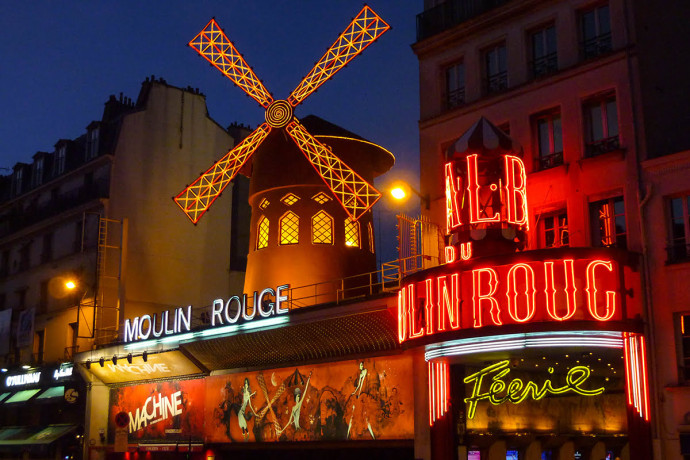
Paris after dark is a different city. The museums lock their doors, the boutiques draw their grilles, and a parallel universe opens — one of whispered passwords, velvet ropes, and champagne chilled to precisely six degrees. This is not the Paris of tourist bateaux-mouches and crowded cabaret floors. This is the Paris of private members' clubs, underground cocktail dens, and rooftop bars where the Eiffel Tower sparkles as if on command. We have curated the addresses that define the city's exclusive nightlife — places where entry is a privilege, not a right.
Access to these spaces requires more than a reservation. It requires presentation, connections, and the right company. Should you seek a VIP companion who navigates Parisian nightlife with instinctive grace, who knows how to walk past a velvet rope without breaking stride, the right introduction opens doors that remain closed to others.
Silencio: David Lynch's fever dream beneath the streets
A private club designed by a filmmaker
Silencio is the private members' club conceived by director David Lynch and opened in 2011 beneath Rue Montmartre. The interior is a physical manifestation of his cinematic imagination: gold-leaf ceilings, mirrored corridors that lead nowhere, a library with no books, a cinema that screens rare films for thirty guests at a time. The design draws on the dream logic of Lynch's films — every room is a scene, every corridor a transition into another mood.
Membership is selective. After midnight, a limited number of non-members are admitted at the discretion of the door. The trick is to arrive with someone who belongs, or to move as though you do. The crowd is a mix of art-world figures, fashion editors, and film people who talk in low voices about projects that will never be announced.
The smoking room and the stage
The smoking room at Silencio is a gold-leaf cave where conversation hums and the air is thick with intrigue. The main stage hosts live jazz, electronic sets, and occasional performances by artists whose names are whispered rather than advertised. The programming is deliberately opaque — you find out what is happening when you arrive, and that is the point.
Champagne and the art of the late night
Silencio serves champagne by the glass and bottle, alongside a concise cocktail list that favours clarity over complexity. The champagne of choice among regulars is a grower Blanc de Blancs, poured at the perfect temperature into flutes so thin they seem to vanish. The club stays open until 4 a.m. on weekends, and the hours between midnight and closing are when the true character of the place reveals itself.
Rasputin: the supper club behind the unmarked door
A Paris legend restored
Rasputin sits behind an unmarked black door on Rue de Bassano, just off the Champs-Élysées. In the 1980s it was the most decadent nightspot in Paris — a restaurant and club where champagne flowed, vodka was served in crystal carafes, and the entertainment pushed boundaries that today's venues would not dare approach. After years of silence, it reopened in 2024 under new ownership that respects the original spirit while polishing the edges for a modern clientele.
The descent down the curved staircase is theatrical. The main room is a cavern of red velvet, dark wood, and low lighting. A stage hosts live acts — singers, burlesque performers, musicians — and the energy builds as the night progresses. Dinner is served until midnight. After that, the tables are cleared and the club begins.
Caviar, vodka, and the performance of indulgence
Rasputin's menu leans into Russian opulence: caviar service with blinis and crème fraîche, vodka tastings from a cellar that includes bottles from the Tsarist era, smoked fish, rich meats. The champagne list is extensive, and the sommelier has a particular passion for rare cuvées. The experience is designed to be excessive, and it succeeds brilliantly.
The door policy and the right companion
Entry to Rasputin requires a reservation, a certain look, and the right attitude. The door staff are courteous but firm. Arriving as a couple or a well-composed group improves your chances. For an evening at Rasputin, where the atmosphere is charged and the eyes of the room are always watching, a high-class companion who understands the codes of exclusive Parisian nightlife — elegant, poised, and entirely at ease in the spotlight — transforms entry into arrival.
Bar Hemingway at The Ritz: where cocktails are scripture
The smallest bar with the largest legend
Bar Hemingway occupies a tiny room at the back of the Ritz Paris, panelled in dark wood and lined with photographs of the writer who gave it his name. It seats only twenty-five people, and it does not take reservations. To secure a stool at the bar, you arrive early — by 6 p.m. if you want certainty, by 8 p.m. if you are willing to wait. The wait is part of the ritual. The Ritz lobby, with its gilded corridors and fresh orchids, is not a bad place to linger.
The barman, Colin Field, is a legend. He has been at the Ritz for decades and is widely regarded as one of the finest bartenders in the world. He creates cocktails with the precision of a chemist and the flair of a stage actor. His Serendipity, a blend of champagne, Calvados, and fresh mint, is a drink that has launched a thousand imitations and never been bettered.
The cocktails that define a city
Bar Hemingway's menu is a document of cocktail history. The Ritz 75 was born here — a variation on the French 75, made with gin, champagne, lemon, and a secret touch. The Clean Dirty Martini is a paradox in a glass, simultaneously crisp and savoury. Each drink is prepared tableside, with commentary if you wish it, and the ritual of the preparation is as compelling as the taste.
Dress code and etiquette
Bar Hemingway requires gentlemen to wear a jacket. The atmosphere is hushed, intimate, almost conspiratorial. Conversation is the primary entertainment. This is not a place for loud laughter or mobile phones. It is a place for a tête-à-tête, a proposal, a deal sealed with a handshake and a perfectly mixed martini. The right companion here is one who understands the value of a lowered voice and a slow evening.
Le Carmen: the cocktail bar in a former hôtel particulier
From George Bizet to the modern avant-garde
Le Carmen occupies the ground floor of a hôtel particulier in Pigalle where the composer Georges Bizet once lived and, according to local legend, wrote the opera that gives the bar its name. The space is a riot of Belle Époque detail — gilded mouldings, high ceilings, a sweeping staircase — married to contemporary design interventions that signal the creative direction of the current proprietors.
The bar is the work of the Experimental Group, the team behind some of Paris's most influential cocktail addresses. The drinks are innovative without being gimmicky. The crowd is a mix of fashion, music, and media, with a strong contingent of locals who treat the place as an extension of their living rooms.
The mezzanine and the basement
Le Carmen operates on three levels. The ground floor is the main bar, where mixologists work beneath a frescoed ceiling. The mezzanine is for private groups, suspended above the action with a view of the room below. The basement, exposed stone and low arches, hosts DJ sets and late-night dancing. The transition from cocktail evening to dance floor night happens organically, without a discernible shift, and that seamlessness is the bar's particular genius.
Reservations and the right moment
Le Carmen accepts reservations, and for the ground-floor bar on weekends, they are essential. The mezzanine can be booked for private events — a birthday, a pre-party before a larger night, an intimate gathering that requires a beautiful backdrop and flawless cocktails. For those seeking a model companion to accompany them to a private booking or a night that moves from Le Carmen to the clubs beyond, the right introduction ensures the evening flows without interruption.
Bisou: the cocktail bar with no menu
Tell the bartender how you feel
Bisou, on Boulevard du Temple in the Marais, has no menu. None. You tell the bartender what flavours you like, what mood you are in, what spirit you prefer — or you simply say «surprise me» — and a bespoke cocktail appears. The team is trained to read guests with astonishing accuracy. The drink that arrives often feels like it was invented for that exact moment, that exact conversation.
The interior is pastel-hued and warm, with a long bar, velvet banquettes, and an atmosphere that encourages lingering. The music is carefully curated, low enough to allow conversation, present enough to provide a pulse. Bisou is where a first date becomes a third date, where acquaintances become friends, where a casual drink stretches to three.
The art of the bespoke cocktail
The bartenders at Bisou work with a palette of house-made infusions, fresh juices, premium spirits, and unexpected ingredients — edible flowers, smoked salts, herb oils. The process is collaborative. The bartender asks questions, gauges your response, adjusts the direction. The final result is a drink that exists only once, for you, on that evening. This is mixology as portraiture.
Why Bisou matters in the Paris nightlife landscape
Bisou represents a shift in Parisian drinking culture — away from formality, toward personality. It is not a luxury bar in the traditional sense. There is no dress code, no velvet rope, no champagne list thicker than a novel. But the experience is luxurious in its own way: custom, attentive, unique. It is the bar you visit when you want the evening to adapt to you, rather than the other way around.
L'Arc: the Place de l'Étoile club that never sleeps
A Paris institution reborn
L'Arc sits directly on Place de l'Étoile, beneath the Arc de Triomphe, in a space that has hosted Parisian nightlife in various incarnations for decades. The current version is a high-energy club that draws an international crowd of models, athletes, music-industry figures, and those who orbit them. The doors open late, the music runs until dawn, and the atmosphere is unapologetically glamorous.
The design is sleek: dark leather, chrome, a central dance floor beneath a ceiling of lights that shift with the music. The VIP area is a warren of private tables, each with its own security, its own champagne bucket, its own view of the scene. Bottle service is the standard here, and the prices are commensurate with the postcode.
The tables that define your night
Securing a table at L'Arc is a strategic operation. The best tables are on the mezzanine, overlooking the dance floor with a clear view of the room. Booking requires a relationship with the management or a concierge with the right connections. The minimum spend varies by night and by table, and on weekends during fashion week it reaches figures that would buy a small car. The return on that investment is an evening of pure spectacle.
Arrive with the right entourage
At L'Arc, the company you keep determines the table you are offered, the service you receive, the way the room perceives you. Arriving with a beautiful, confident companion is not vanity — it is strategy. A VIP companion who is at home in these settings, who understands the dynamics of a VIP table, and whose presence ensures that the night begins on the right note and stays there, is the difference between a good evening and a legendary one.
Le Piano Bar at Hôtel Amour: the bohemian after-hours
A Pigalle institution with a cult following
Le Piano Bar is the basement venue beneath Hôtel Amour, the boutique hotel in South Pigalle that has become a byword for Parisian cool. The bar is small, dark, and unpredictable. A pianist plays. Singers appear unannounced. The crowd is a cross-section of Paris's creative class — artists, musicians, writers, and those who love them.
There is no door policy to speak of, but the room fills quickly and latecomers are turned away by simple lack of space. The solution is to arrive early, order a bottle of natural wine or a Negroni, and settle in. The atmosphere is warm, unpretentious, and faintly conspiratorial — a house party hosted by the most interesting people you have never met.
The music: spontaneous and unrepeatable
Le Piano Bar operates without a programme. Musicians come because they want to play. Some nights a jazz trio forms spontaneously. Other nights a singer-songwriter tries out new material. Occasionally a star of French chanson drops in and performs three songs before disappearing into the night. The unpredictability is the point. You come here not for what is scheduled but for what might happen.
The art of the Parisian night
Navigation and protocol
Parisian nightlife operates on a gradient of accessibility. Some venues, like Bisou and Le Carmen, welcome anyone with a reservation and the right attitude. Others, like Silencio and L'Arc, require connections, membership, or the intercession of a skilled concierge. Understanding which is which, and preparing accordingly, is the difference between a seamless evening and a disappointing one.
The companion factor
An exclusive venue judges the group, not just the individual. A well-dressed couple or a composed group of two or three will always fare better at a velvet rope than a single guest or a loud crowd. The art of the Parisian night is the art of presentation — and the person at your side is the central element of that composition. Whether you are attending a private event, hosting a table at L'Arc, or seeking an intimate evening at Bar Hemingway, an elite companion who understands the landscape, the etiquette, and the energy of Paris after dark elevates every element of the night.
Champagne, always
A final note on Paris nightlife: champagne is the currency. It is ordered at the bar, at the table, in the club, on the rooftop. It signals celebration, sophistication, and an understanding of how things are done. When in doubt, order champagne. The brand matters less than the gesture — but if you want to impress, ask for a grower champagne. It shows you know the difference.
Planning your Paris nightlife experience
A flawless Parisian night begins long before the first glass is poured. It begins with a plan. Which venues, in which order, with which people. For those travelling to Paris specifically for its nightlife, Moulin Blanc Travel provides curated luxury travel planning, from securing hotel reservations near the venues to arranging private transfers between clubs. The right preparation ensures the night unfolds without friction.
The night is a blank page
Paris at night is a story waiting to be written. The bars, the clubs, the hidden rooms, the piano notes floating up a stairwell — these are the elements. What you make of them depends on your choices, your preparation, and your company. The city rewards those who approach the night with intention. Choose your venue. Choose your moment. Choose your companion. Then step through the door and let Paris do what Paris does best: transform an ordinary evening into a memory that glows for years.