
Luxury Paris Neighborhoods
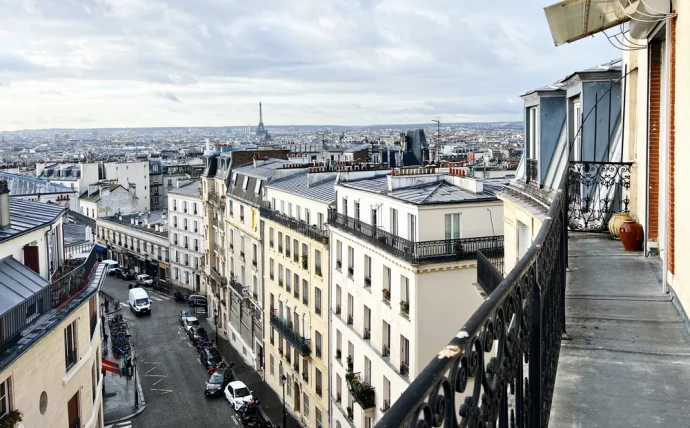
Paris is not one city. It is a collection of villages, each with its own architecture, its own codes, its own idea of what constitutes a beautiful life. To know Paris is to know its arrondissements — not as administrative districts but as distinct worlds, separated by a boulevard or a bridge, yet atmospherically decades apart. We have mapped the neighbourhoods that define Parisian luxury, the quartiers where property prices are discussed in whispers and where the simple act of buying a baguette involves a certain standard of dress.
Choosing where to stay, stroll, and be seen in Paris is a strategic decision. It shapes the restaurants you will book, the boutiques you will browse, the people you will encounter. Some neighbourhoods demand a companion whose elegance matches the postcode. If you plan to explore the golden triangle of the 8th arrondissement or the artistic enclaves of Saint-Germain, a model companionwho knows these streets intimately is the difference between walking through a neighbourhood and truly inhabiting it.
Saint-Germain-des-Prés: the literary soul of the Left Bank
A history written in café chairs
Saint-Germain-des-Prés is the quartier where existentialism was born at Café de Flore, where Juliette Gréco sang and Miles Davis played, where Jean-Paul Sartre and Simone de Beauvoir argued philosophy over espresso and cigarettes. Today the intellectuals have largely decamped to academia, but the spirit remains in the bookshops, the art galleries, and the café terraces that still fill with thinkers, writers, and those who aspire to be mistaken for them.
The neighbourhood centres on the church of Saint-Germain-des-Prés, the oldest in Paris, dating to the sixth century. Around it cluster the legendary cafés — Les Deux Magots and Café de Flore — and the narrow streets lined with galleries, antiquarian bookshops, and boutiques selling objects of quiet, refined beauty.
Shopping the Left Bank way
Saint-Germain shopping is not the flash of Avenue Montaigne. It is discreet, intellectual, curated. The streets to know are Rue de Seine, Rue Jacob, and Rue Bonaparte. Here you will find the Parisian concept store Merci, the perfumer Frédéric Malle, and the bookshop L'Écume des Pages, which stays open late and hosts readings by prominent authors. The style is understated — dark colours, excellent tailoring, accessories that signal taste rather than wealth.
Dining with the spirits of the past
The restaurants of Saint-Germain are institutions. Lapérouse, on Quai des Grands-Augustins, has private salons where mirrors still bear scratches from the diamonds of courtesans testing their authenticity. Le Procope, founded in 1686, served Voltaire and Rousseau. For a contemporary meal, book at Semilla or Fish La Boissonnerie, both favourites of the local creative class.
The art of the Saint-Germain evening
An evening in Saint-Germain begins with an apéritif at La Palette, an artists' bar near the Beaux-Arts, continues with dinner in a candlelit bistro, and ends with a concert at the Église Saint-Germain or a late drink at the bar of Hôtel Lutetia. The pace is slow. The pleasure is in the conversation. It is the perfect quartier for a companion who can discuss literature, art, and the nuances of a well-made Negroni. For those seeking such company, a high-class companion who is as comfortable discussing Camus as she is navigating the wine list transforms a Saint-Germain evening into something unforgettable.
The 8th Arrondissement: the golden triangle of power and prestige
Where Paris does business and pleasure simultaneously
The 8th arrondissement contains the Triangle d'Or — the golden triangle bounded by Avenue Montaigne, Avenue George V, and the Champs-Élysées. This is the quartier of haute couture, five-star hotels, and corporate headquarters. It is where Dior, Chanel, and Saint Laurent operate their flagship boutiques. It is where the Four Seasons George V and the Plaza Athénée compete for the title of Paris's finest hotel. It is where money goes to be seen.
The architecture is Haussmannian and imposing — wide boulevards, cream-coloured stone, wrought-iron balconies, and immense doors that open onto cobbled courtyards concealing private mansions. The 8th is not a neighbourhood of hidden gems. It is a neighbourhood of visible, confident, long-established wealth.
Avenue Montaigne: the couture pilgrimage
Avenue Montaigne is the spine of Parisian fashion. Dior at number 30, where the ateliers occupy the upper floors above the boutique. Chanel at number 42. Saint Laurent at number 38. Valentino, Fendi, Louis Vuitton, Céline — the roll call of fashion houses reads like a history of twentieth-century style. Shopping here is a ritual. Appointments are recommended. The service is impeccable. The alterations are performed by hands that have dressed princesses.
Walking Avenue Montaigne requires a certain presentation. The street itself is a catwalk, and both sides of the pavement play their parts. To stroll this avenue with a companion who looks as though she stepped from a campaign image — tall, elegant, dressed with apparent effortlessness — is to participate fully in the theatre of the quartier. A model companion who embodies this aesthetic is the perfect company for a couture appointment or a lunch at L'Avenue, the see-and-be-seen brasserie on the corner.
The Champs-Élysées reconsidered
The Champs-Élysées has long been surrendered to tourists and chain stores, but a renaissance is underway. The opening of the Galeries Lafayette Champs-Élysées in 2019 brought a new energy, and the restoration of the historic Fouquet's hotel promises further elevation. The upper avenue, near the Arc de Triomphe, retains its grandeur. The lower avenue, toward Place de la Concorde, gives way to the gardens and the Grand Palais. The avenue's best-kept secret is the Hôtel de Crillon, a Rosewood hotel whose bar, Les Ambassadeurs, is a masterpiece of gilded ceilings and theatrical cocktails.
Le Marais: the historic heart with a contemporary pulse
From marshland to fashion frontier
Le Marais — the marsh — was drained in the twelfth century and became the favoured residential district of the Parisian nobility. The hôtels particuliers they built, with their grand courtyards and stone facades, still stand, converted now into museums, galleries, and boutiques. The neighbourhood spans the 3rd and 4th arrondissements and contains some of the oldest surviving architecture in Paris, including the Place des Vosges, the most beautiful square in the city.
Today Le Marais is the epicentre of Parisian cool. The narrow medieval streets, too tight for Haussmann's boulevard plan, survived the nineteenth-century demolitions and now shelter an eclectic mix of concept stores, vintage boutiques, falafel stands, and cocktail bars. The neighbourhood's creative energy draws a young, international crowd, and on Sundays, when much of Paris closes, the Marais remains vibrantly alive.
The Place des Vosges and the Musée Picasso
Place des Vosges, laid out in 1605 under Henri IV, is a square of perfect symmetry — pink brick facades, arcaded ground floors, a central garden of lime trees and fountains. Victor Hugo lived at number 6. Today the square is ringed by galleries and cafés. Lunch at Carette, beneath the arcades, is a Parisian ritual.
The Musée Picasso occupies the Hôtel Salé, a Baroque mansion that houses the world's largest collection of Picasso's works. The collection spans every period, and the mansion's grand staircase is worth the visit alone. The neighbourhood is also home to the Musée Carnavalet, which tells the history of Paris through a labyrinth of period rooms.
Shopping the independent boutiques
Le Marais is the antidote to the luxury chains of the 8th. The shopping here favours independent designers, concept stores, and vintage dealers. Merci, on Boulevard Beaumarchais, is the neighbourhood's anchor — a concept store with a café, a bookstore, and a rotating curation of fashion, homewares, and accessories. The streets around Rue des Francs-Bourgeois, Rue de Turenne, and Rue Charlot are dense with discoveries: The Broken Arm for avant-garde fashion, Officine Universelle Buly for apothecary treasures, Acqua di Parma for Italian fragrance.
Nightlife in the Marais
The Marais transforms after dark. Bars like Le Mary Celeste and Sherry Butt draw cocktail enthusiasts. Candelaria, hidden behind a taco shop, serves some of the most inventive cocktails in Paris. The neighbourhood is also home to Le Dépot, a legendary nightclub, and to the quieter pleasures of a late dinner at Au Passage or early drinks at La Perle. The Marais rewards exploration — there is always a new courtyard, a new bar, a new discovery.
Saint-Honoré and the 1st Arrondissement: royalty, retail, and refinement
The rue Saint-Honoré: a street of discreet luxury
Rue Saint-Honoré is the spine of the 1st arrondissement and the most elegant shopping street in Paris. Unlike the wide, tourist-clogged boulevards, Rue Saint-Honoré is narrow and intimate. The boutiques here are temples of discretion: Hermès at number 24, where the queue begins at dawn for a Birkin bag. Goyard at number 233, where the luggage is sold without fanfare to those who know. The concept store Colette closed in 2017, but its spirit lives on in the neighbourhood's continued commitment to curation over commerce.
The street runs from the Palais Royal to the Place Vendôme, linking two of the most beautiful squares in Paris. It passes through the Jardin des Tuileries, where chairs by the fountain offer a pause between shopping and the rest of the day.
Place Vendôme: the square of kings and jewellers
Place Vendôme is the most prestigious address in Paris. The Ritz occupies numbers 15 and 17. The Ministry of Justice occupies the building where Chopin died. The remainder of the square is given over to high jewellery — Cartier, Boucheron, Van Cleef & Arpels, Chaumet — each boutique a vault of precious stones and centuries of craftsmanship. The column at the centre, cast from captured cannons at Austerlitz, is topped by a statue of Napoleon.
Walking into Place Vendôme is an experience of arrival. The square opens suddenly from the narrow streets, a perfect rectangle of classical facades and hushed grandeur. To enter the square with a companion whose elegance matches the jewellery windows is to feel, momentarily, that you belong to this world. An elite companion who knows how to carry herself through spaces where every detail is observed completes the picture.
The Palais Royal gardens: a hidden haven
The Palais Royal, built for Cardinal Richelieu in the 1630s, contains a garden that is among the most peaceful spaces in central Paris. The arcades that ring the garden house boutiques, galleries, and the original Café Kitsuné. The striped columns of Daniel Buren's controversial art installation in the courtyard have become an icon. Lunch at Restaurant du Palais Royal, under the arcades, offers a view of the garden and a menu of classic French dishes executed with precision.
Montmartre: the village on the hill
Sacré-Cœur and the artists' legacy
Montmartre clings to the highest hill in Paris, crowned by the white domes of Sacré-Cœur. The basilica is a relative newcomer, completed in 1914, but the neighbourhood's history reaches back to the Roman era. In the late nineteenth and early twentieth centuries, Montmartre was the centre of artistic Paris — Renoir, Van Gogh, Picasso, and Modigliani all lived and worked here, drawn by cheap rents and the particular light of the hill.
Today Montmartre is a quarter of two faces. The area around Place du Tertre is given over to tourism, with portrait artists and souvenir shops. But climb higher, past the crowds, into the streets around Rue des Saules and Rue Cortot, and the village emerges — quiet staircases, hidden gardens, the vineyard of Clos Montmartre, the only one in Paris.
The Musée de Montmartre and Renoir's garden
The Musée de Montmartre occupies the building where Renoir painted some of his most famous works. The garden, with its view across the vineyards to the northern suburbs, is a pocket of bucolic calm. The museum tells the story of the neighbourhood's artistic heyday, and the café in the garden is one of the most charming spots in Paris for a quiet coffee.
Dining on the hill
Montmartre's dining scene is resurgent. Le Coq Rico, on Rue Lepic, serves poultry from heritage breeds with a rigour that borders on obsession. La Maison Rose, the pink house on Rue de l'Abreuvoir, is one of the most photographed restaurants in Paris, and the food matches the facade. For a drink, Le Bar à Bulles, hidden behind La Machine du Moulin Rouge, offers a terrace with a view of the Moulin Rouge's windmill and a crowd of creative locals.
Auteuil and the 16th Arrondissement: the discreet elegance of the west
The village that Paris absorbed
Auteuil was a village until 1860, when Haussmann annexed it to Paris. It retains a distinct identity — quieter, greener, more residential than the central arrondissements. The streets curve where the Haussmannian grid would have straightened them, preserving the shape of the old village. The architecture is a mix of Art Nouveau townhouses, modern apartments, and a few surviving country houses that recall the area's pastoral past.
The 16th is the arrondissement of old money, diplomatic residences, and the French bourgeoisie. It is not fashionable in the way of the Marais or the 8th. It is timeless. The shops cater to residents who value quality over novelty, and the restaurants are neighbourhood institutions rather than destination addresses.
The Bois de Boulogne and the gardens
The Bois de Boulogne, the vast park on the western edge of Paris, is the 16th's backyard. Twice the size of Central Park, it contains lakes, gardens, riding stables, the Fondation Louis Vuitton, and the Jardin d'Acclimatation, a children's amusement park. On weekends, the paths fill with joggers, cyclists, and families. The Chalet des Îles, a restaurant on an island in the Lac Inférieur, is reachable only by boat and offers one of the most bucolic lunches in Paris.
The Fondation Louis Vuitton and the cultural renaissance
The Fondation Louis Vuitton, designed by Frank Gehry and opened in 2014, is a glass ship sailing through the trees of the Bois de Boulogne. Its exhibitions are among the most ambitious in Paris. The building itself, with its billowing glass sails and cascading terraces, rewards hours of exploration. The restaurant, Le Frank, holds a Michelin star and offers a menu that matches the architectural ambition of the setting.
Roland Garros and the sporting life
The 16th is home to Roland Garros, the stadium where the French Open is played each spring. The tournament transforms the neighbourhood, filling hotels and restaurants with an international crowd. Even outside the tournament weeks, the stadium and its museum are open for tours, and the adjacent tennis club is a bastion of French sporting society.
The art of choosing your quartier
Matching neighbourhood to intention
A Parisian neighbourhood is a frame for your experience. The 8th frames power, fashion, and visibility. Saint-Germain frames intellect, history, and bohemian elegance. Le Marais frames creativity, discovery, and a younger energy. The 1st frames luxury, heritage, and discretion. Montmartre frames romance, nostalgia, and the village spirit. The 16th frames tradition, nature, and understated wealth.
Your choice of quartier should reflect the Paris you wish to inhabit. A shopping expedition belongs to the 8th. A cultural weekend to Saint-Germain or the Marais. A romantic escape to Montmartre. A business trip to the 1st or the 16th. The right companion adapts to each setting, moving from the boutiques of Avenue Montaigne to the galleries of Le Marais with the same grace. For introductions to a high-class companion who knows every corner of these quartiers, the right resource is essential.
The Parisian art of flânerie
The verb flâner has no direct English translation. It means to stroll without purpose, to observe, to absorb the city through the soles of your feet. Paris is the world capital of flânerie, and each neighbourhood offers a different rhythm. In the 8th, you walk with purpose. In Saint-Germain, you walk with curiosity. In the Marais, you walk with a sense of discovery. In the 1st, you walk with reverence. Flânerie is the simplest luxury Paris offers, and it costs nothing.
Planning your Paris neighbourhood experience
To truly know Paris is to spend time in its quartiers — not rushing between monuments but sitting in cafés, walking side streets, discovering the rhythm of each area. For those planning a neighbourhood-focused Paris itinerary, Moulin Blanc Travel provides curated luxury travel planning, from private walking tours with local experts to bespoke shopping itineraries across the golden triangle and the Left Bank.
A city of villages
Paris reveals itself slowly, neighbourhood by neighbourhood. The city rewards those who take the time to learn its geography not as a map but as a collection of personalities. Each quartier has its own hours, its own light, its own cast of characters. To know them all is the work of a lifetime. To begin that work is the pleasure of any stay. Choose your arrondissement with care. Then walk, and let Paris teach you who you are within its streets.