
Best Areas in London for Luxury Living and Exclusive Experiences
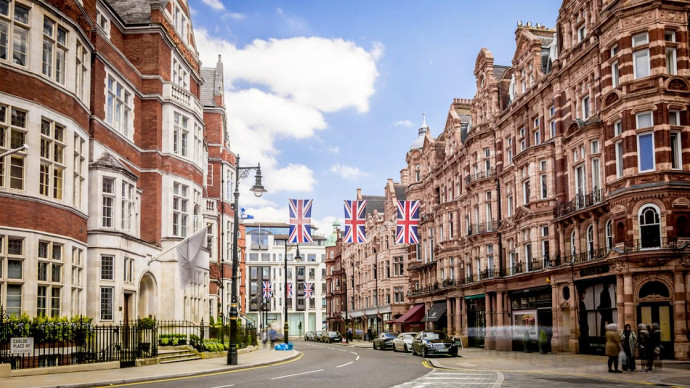
London is not one city. It is a collection of villages, each with its own architecture, its own codes, its own idea of what constitutes a beautiful life. To know London is to know its neighbourhoods — not as stops on the Tube map but as distinct worlds, separated by a park or a high street, yet atmospherically decades apart. We have mapped the areas that define London luxury, the postcodes where property prices are discussed in whispers and where the simple act of buying a coffee involves a certain standard of dress.
Choosing where to stay, stroll, and be seen in London is a strategic decision. It shapes the restaurants you will book, the boutiques you will browse, the people you will encounter. Some neighbourhoods demand a companion whose elegance matches the postcode. If you plan to explore the garden squares of Mayfair or the artistic enclaves of Marylebone, a model companionwho knows these streets intimately is the difference between walking through a neighbourhood and truly inhabiting it.
Mayfair: the centre of gravity
London's most aristocratic village
Mayfair is the most expensive square on the Monopoly board for a reason. Bounded by Park Lane, Oxford Street, Regent Street, and Piccadilly, this neighbourhood has been the epicentre of London luxury since the eighteenth century. The streets are wide, the buildings are grand, and the garden squares — Grosvenor Square, Berkeley Square, Hanover Square — are among the most beautiful in London. This is where the aristocracy built their townhouses, where the great hotels raised their facades, and where the art galleries and auction houses of Bond Street and Cork Street conduct their trade.
Mayfair is not a neighbourhood of discovery. It is a neighbourhood of arrival. You do not stumble upon Mayfair. You go there because you have a reason — a dinner at Hélène Darroze, a night at Annabel's, a fitting on Savile Row, a viewing at Sotheby's. The streets reward those who know their destination and walk with purpose.
Mount Street and the art of the Mayfair afternoon
Mount Street, running from Berkeley Square to Park Lane, is Mayfair's most elegant shopping street. The Connaught Hotel anchors one end. The boutiques — Lanvin, Balenciaga, Goyard, Corthay — line the pavement. The Mount Street Deli serves coffee to a crowd that dresses for the occasion. On a Saturday afternoon, the street is a catwalk, and both sides of the pavement play their parts. To stroll Mount Street with a high-class companion who looks as though she belongs in the window of every boutique is to participate fully in the theatre of Mayfair.
The garden squares: private green in the heart of the city
Mayfair's garden squares are private — locked behind iron gates, accessible only to residents and their guests. Grosvenor Square, the largest, is an exception; it is open to the public and offers a green refuge in the centre of the neighbourhood. Berkeley Square, with its plane trees and its nightingales, is the most romantic. A walk through Berkeley Square at dusk, when the lamps flicker on and the traffic fades, is one of London's quiet pleasures.
Marylebone: the village that London forgot to swallow
A high street that feels like a community
Marylebone, just north of Mayfair, is Mayfair's more relaxed sibling. The high street runs from Baker Street to Oxford Street, and it is lined with independent shops, cafés, and restaurants that feel curated rather than commercial. Daunt Books, the Edwardian bookshop with its long oak galleries and stained-glass window, is one of the most beautiful bookshops in the world. La Fromagerie, the cheese shop and café on Moxon Street, is a temple to artisan produce. The Chiltern Firehouse, the boutique hotel in a former fire station, is the neighbourhood's social hub.
Marylebone is the neighbourhood of choice for those who find Mayfair too formal and Notting Hill too chaotic. It is sophisticated without being stuffy, wealthy without being ostentatious. The streets — Marylebone Lane, Chiltern Street, Devonshire Place — are quiet and residential, and the atmosphere is correspondingly calm. For a luxury companion Marylebone afternoon — lunch at Chiltern Firehouse, shopping on the high street, coffee at Monocle Café — the right company transforms a pleasant day into a perfect one. A model companion who appreciates the neighbourhood's understated elegance is the ideal company for a Marylebone stroll.
The Wallace Collection and Manchester Square
The Wallace Collection, housed in Hertford House on Manchester Square, is one of London's finest small museums. The collection spans Old Master paintings, French eighteenth-century furniture, and a world-class armoury. Entry is free, the galleries are rarely crowded, and the courtyard restaurant, beneath a glass roof, is one of the most charming spots in London for lunch. The museum is a Marylebone secret, known to locals and missed by tourists, and a visit here reveals the neighbourhood's cultural depth.
Belgravia: the embassy quarter
White stucco and garden squares
Belgravia, south of Knightsbridge, is a neighbourhood of white stucco terraces, private garden squares, and embassy flags. The architecture is uniform, grand, and quietly imposing — a vision of nineteenth-century London that has survived almost intact. Eaton Square, the centrepiece of the neighbourhood, is a long rectangle of green surrounded by six-storey terraces, each with a porticoed entrance and a mews house at the back. The square is private, accessible only to residents, and it is one of the most exclusive addresses in London.
Belgravia is residential rather than commercial. The streets are quiet, the traffic is minimal, and the atmosphere is one of discreet wealth. The neighbourhood's businesses — the boutiques of Elizabeth Street, the restaurants of Pimlico Road — cater to residents who value quality over novelty. This is not a neighbourhood for a night out. It is a neighbourhood for a quiet dinner at a local Italian, a walk through the gardens, and an early night in a townhouse that has sheltered diplomats and aristocrats for two centuries.
The Goring and the Buckingham Palace proximity
The Goring, on Beeston Place, is the last family-owned luxury hotel in London and the official hotel of the Royal Family. It sits a hundred metres from Buckingham Palace, and its garden is one of the most peaceful spots in the city. Afternoon tea at The Goring is a ritual of the Belgravia social calendar. The hotel's dining room holds a Michelin star, and the bar is a favourite of the neighbourhood's residents. To stay at The Goring is to experience Belgravia from the inside.
Knightsbridge: the international crossroads
Harrods, Harvey Nichols, and the global shopper
Knightsbridge is London's most international neighbourhood, defined by two department stores that need no introduction. Harrods, on Brompton Road, is a city within a city — seven floors of fashion, food, furniture, and every luxury good imaginable, served by a staff that speaks more languages than the United Nations. Harvey Nichols, at the corner of Sloane Street, is the fashion-forward alternative, with a younger, edgier selection and a fifth-floor bar that offers a view of the rooftops.
Knightsbridge is not a neighbourhood for those seeking quiet authenticity. It is loud, crowded, and driven by commerce. But for a shopping expedition — a day at Harrods, lunch at the food hall, an afternoon at Harvey Nichols — it is unmatched. To navigate Knightsbridge with a companion who understands the geography and the pace, who can move from the shoe department to the champagne bar without missing a step, is to transform a shopping trip into a strategic operation. An elite companion who knows the difference between a Birkin and a Kelly, who can discuss the merits of a vintage Krug versus a grower champagne, is the ideal company for a Knightsbridge afternoon.
The Mandarin Oriental and Hyde Park
The Mandarin Oriental, on Knightsbridge overlooking Hyde Park, is the neighbourhood's flagship hotel. The spa is among the best in London, and the hotel's restaurant, Dinner by Heston Blumenthal, holds two Michelin stars and offers a menu inspired by historic British recipes. The park itself — 350 acres of meadows, lakes, and riding paths — is the neighbourhood's backyard. A morning walk through Hyde Park, followed by breakfast at the Mandarin Oriental, is a Knightsbridge ritual that has survived centuries.
Chelsea and South Kensington: the bohemian aristocrats
King's Road and the spirit of the 1960s
Chelsea, south of Knightsbridge, was the epicentre of London's swinging sixties. The King's Road was the fashion runway of the decade, where Mary Quant sold miniskirts and the Rolling Stones bought their velvet suits. Today the road is more commercial — high-street brands, design shops, the Saatchi Gallery — but the neighbourhood retains a creative energy. The streets behind the King's Road, particularly around Chelsea Green and the Physic Garden, are quiet, residential, and extremely wealthy.
South Kensington, to the west, is the museum quarter — the Victoria and Albert Museum, the Natural History Museum, the Science Museum — and a neighbourhood of wide streets, white stucco, and a large French expatriate community. The Lycée Français Charles de Gaulle is here, as are the French consulate and a collection of patisseries that rival anything in Paris. To live in South Kensington is to live in a pocket of France transplanted to London.
The Ivy Chelsea Garden and the neighbourhood restaurant
The Ivy Chelsea Garden, on the King's Road, is the neighbourhood's social anchor — a restaurant and bar with a beautiful garden terrace that fills with the Chelsea set from breakfast through late dinner. The menu is British comfort food elevated to luxury, and the atmosphere is always lively. For a relaxed evening in Chelsea, dinner at the Ivy, followed by a walk along the river at Chelsea Embankment, is a local ritual that never grows old.
Notting Hill: the colourful village
Portobello Road and the carnival spirit
Notting Hill, west of Paddington, is London's most photogenic neighbourhood. The pastel-coloured terraces, the famous bookshop, the Portobello Road market — these are images that have been exported around the world through film and television. But Notting Hill is more than its postcard. It is a neighbourhood of genuine community, where the annual carnival transforms the streets into a celebration of Caribbean culture, and where the independent shops and restaurants of Westbourne Grove and Ledbury Road rival anything in central London.
The neighbourhood attracts a creative crowd — writers, designers, musicians, and those who work in the industries that cluster around Soho and the West End. The restaurants — The Ledbury, Core by Clare Smyth, Dorian — are among the best in London. The bars — The Cow, The Pelican, The Negroni — are local institutions. Notting Hill is the neighbourhood you choose when you want London to feel like a village, and it succeeds in that illusion more completely than any other quartier.
The private gardens and the communal life
Notting Hill's garden squares are private, like those of Belgravia and Mayfair, but the community is more active. The Ladbroke Square garden, the largest private garden square in London, hosts summer parties and Christmas carol services for residents. The neighbourhood has a strong sense of identity, and newcomers are welcomed if they contribute. This is not a neighbourhood for anonymity. It is a neighbourhood for belonging.
The art of choosing your London neighbourhood
Matching area to intention
A London neighbourhood is a frame for your experience. Mayfair frames power, fashion, and formality. Marylebone frames sophistication, community, and understated elegance. Belgravia frames tradition, discretion, and old money. Knightsbridge frames international glamour and commerce. Chelsea frames creative energy and bohemian heritage. Notting Hill frames colour, community, and village charm.
Your choice of area should reflect the London you wish to inhabit. A shopping expedition belongs to Knightsbridge and Mayfair. A cultural weekend to South Kensington and Marylebone. A romantic escape to Notting Hill. A business trip to Mayfair or Belgravia. The right companion adapts to each setting, moving from the boutiques of Mount Street to the galleries of Cork Street with the same grace. For introductions to a VIP companion who knows every corner of these neighbourhoods, the right resource is essential.
The London art of the walk
London is a city made for walking. The distances between neighbourhoods are short — Mayfair to Marylebone is ten minutes, Mayfair to Belgravia is fifteen, Knightsbridge to Chelsea is twenty — and the journeys take you through some of the most beautiful streets in the world. A walk from The Ritz to The Connaught, through Green Park and Berkeley Square, is a lesson in London's geography and history. A walk from Notting Hill to Holland Park, along Lansdowne Road and through the park's Kyoto Garden, is a pocket of peace in the middle of the city. Walk London, and the city reveals itself.
Planning your London neighbourhood experience
To truly know London is to spend time in its areas — not rushing between monuments but sitting in cafés, walking side streets, discovering the rhythm of each neighbourhood. For those planning a neighbourhood-focused London itinerary, Moulin Blanc Travel provides curated luxury travel planning, from private walking tours with local experts to bespoke shopping itineraries across Mayfair, Marylebone, and Knightsbridge.
Conclusion: a city of villages
London reveals itself slowly, neighbourhood by neighbourhood. The city rewards those who take the time to learn its geography not as a Tube map but as a collection of personalities. Each area has its own hours, its own light, its own cast of characters. To know them all is the work of a lifetime. To begin that work is the pleasure of any stay. Choose your postcode with care. Then walk, and let London teach you who you are within its streets.